
Get your toes tapping and your soul soaring with these music documentaries.
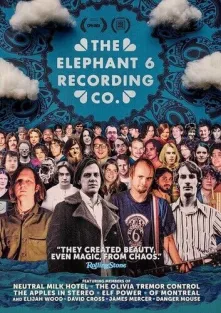
Starting with the elephant in the room, The Elephant 6 Recording Co. documentary takes an inside look at the 90’s rock collective most famous for Neutral Milk Hotel’s mythically held greatest-album-of-its-decade: 1998’s In the Aeroplane over the Sea. But as Robert Schneider, creative/spiritual leader of the collective, states in the documentary, “We were building a universe that was lo-fi, personalized and highly experimental.” Neutral Milk Hotel was one chunk of a whole: a musical unit amongst many bands, playing on each other’s recordings, adding ideas and creating elusive, chaotic, and brilliantly creative music.
Schneider and friends created Elephant 6’s neo-psychedelic tones in a small-town in Louisiana, moved it to Athens, GA, then exported the scene to Denver, CO. A latter-day Brian Wilson (with healthy Brian Eno and Yoko Ono obsessions), Schneider produced his own four-track recordings, intentionally evoking a 1966-67 Pet Sounds vibe in his many productions for the collective’s bands.*
Interviews with luminaries like Olivia Tremor Control’s wild experimenter Will Hart and his sweet pop partner Bill Doss, as they unfold process and muse history, are utter privilege. And the tunes, by bands like Elf Power, The Apples in Stereo, Of Montreal, Beulah, Dressy Bessy, The Minders, The Music Tapes, and Great Lakes, stand up for themselves. We fortunate fellow-travelers experience it all, right along with fans like David Cross, Elijah Wood, and Sub Pop’s James Mercer, who said that without Elephant 6, his band, The Shins, wouldn’t have been inspired to make 2001’s shimmeringly-pretty game-changing debut, Oh, Inverted World. In this way, some may say that Elephant 6 ended grunge. Their lo-fi recordings, their twee, and DIY aesthetic… Mercer says this leads directly to The Shins. I’ll add, and almost everything “indie rock” we have heard since.
A bit more detail may have helped the documentary, but then it may have lost some of its dreamy, immersive, dare-I-say, psychedelic quality, sacrificed the friendship and camaraderie that led to creative control and pure joy. What a dazzling turn of events. Perhaps, after all, Neutral Milk Hotel sums up the alchemy of this creative collective best: “Can’t believe / how strange it is / to be anything / at all.”

Now, picture this! Clint Eastwood’s Good eyeballs Eli Wallach’s Ugly in The Good, The Bad, and The Ugly, included in The Clint Eastwood Collection (1966). An odd chime indicates what Lee Van Cleef’s Bad mentions: a coming twist. Two shots later, Clint fulfills his titular description. Our Good hero and Ugly ride, spirit soaring from the escape, but even more so from the folksy galloping rhythm, the iconic chants and whistling, the twanging Stratocaster, an over-full score by Ennio Morricone, who changed soundtracks forever. (This 3-part podcast elucidates how the movie soundtrack can be described as pre-Morricone and post-Morricone.)

Ever wanted to see this magic worked live? Take a good, long look at The Morricone Duel: The Most Dangerous Concert Ever. The Danish National Symphony Orchestra performs prolific composer Morricone’s scores with precision and soul. The orchestra swells around an extreme close-up of someone whistling on another stunner, 1967’s The Big Gundown, all amid typically off-kilter Morricone instrumentation: harmonica, horse-evoking percussion, and a giant rattlesnake-emulating rotating drum. Feel the ASMR. They also touch on The Godfather, Taxi Driver, and some Tarantino. But this film shows just how Morricone’s stunning music is effective with and beyond its cinematic source material…and holds up upon repeat viewing!
*The documentary conveys how portable four-tracks allow four recordings per tape. The consumer machines came to prominence in the 1960s; classic albums such as Sgt. Pepper’s Lonely Hearts Club Band, Sticky Fingers, and McCartney were recorded on this “home studio” device. More here.
~Posted by Alan J.
Leave a Comment