
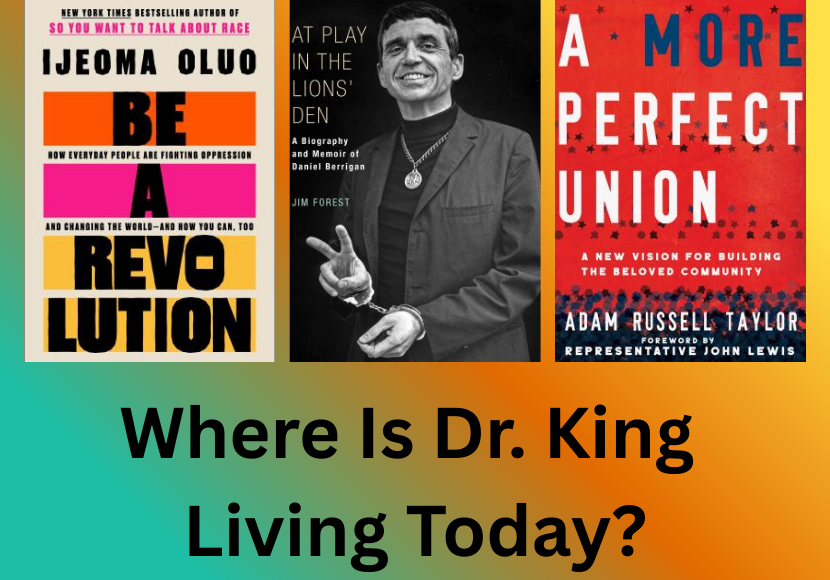
At the start of every year, we celebrate the life and achievements of Dr Martin Luther King Jr. Although his life on Earth ended in 1968, his words and deeds inspired many people to carry on his life’s work right up to this very day. For your own inspiration, here are some of their stories along with some hints of how you, too, could follow in his footsteps.
In Be a Revolution, Seattle author Ijeoma Oluo, who also wrote So You Want to Talk About Race, encourages readers to take loving action against oppression through stories of how activists changed themselves as well as the world. For example, Richie Reseda was in prison when he encountered Black feminist theory. When he got out he founded a workshop to help imprisoned men rethink their ideas about relationships with women. Similarly, many of Dr. King’s followers felt that their lives became much more exciting and meaningful by being part of the Civil Rights movement.
Often, learning about a person’s life will also enlighten us about their culture as well. Judith Hicks Stiehm wrote Champions for Peace to tell the remarkable stories of sixteen women winners of the Nobel Peace Prize. All of them overcame social barriers after being inspired by visions of broadening community, just as Dr. King did. All of them used nonviolent means, and many appealed to the conscience of masses of people, not just political leaders. But their cultural situations meant that they could not directly follow Dr. King’s example; their campaigns included a variety of other methods.
What would happen if a teacher seriously tried to pass on their own commitment to Dr. King’s ideals to their students? Colman McCarthy, in I’d Rather Teach Peace, gives us a detailed history of his efforts to counter the violence that our schools and media teach is the normal way to resolve conflicts. It’s hard to imagine many people doing this at once, but the stories of McCarthy’s students demonstrate the powerful effect they are having in many areas, like the young Muslim teacher whose own commitment to teaching inspires many other African American boys to do the right thing.

Dr. King once said, “The church is the place you go from.” He started in the church and went out to break down segregation and economic injustice and to oppose war. One of the other famous activists to come from a church was Daniel Berrigan, whose life story is told in At Play in the Lions’ Den by Jim Forest. A Jesuit Catholic priest, Berrigan was famous for his many arrests at the White House and other scenes of oppression, and for “going underground” to avoid arrest. He also engaged in many controversies with fellow activists, especially over whether to stick to nonviolent methods, just as Dr King did. His examples encouraged many other people to live out their beliefs in all areas of life, not only in demonstrations.
If you, too, want to do more than demonstrate your passions, consider reading How We Win : a Guide to Nonviolent Direct Action Campaigning by George Lakey, one of the few surviving veterans of the Civil Rights movement still active today. His other books and a documentary video “Citizen George” portray his inspiring life, but this book is a manual of how to actually conduct nonviolent campaigns that have a chance of winning their goals. He uses stories of successful campaigns, and lessons learned from those that were less successful, to outline the necessary steps that can bring about non-destructive progress toward justice.
Despite minimal coverage in the mainstream press, the Civil Rights movement continues to struggle for justice. You can find inspiring stories of its current directions in Reimagining the Revolution: Four Stories of Abolition, Autonomy, and Forging New Paths in the Modern Civil Rights Movement by Paula Lehman-Ewing. Toward the end of his life, Dr King began to address larger systems of oppression; since then his followers have taken on many specific elements like the criminal justice system, the banking system, the education system, and the general neglect of social services. Perhaps the best known example in Seattle was the resistance to the new King County youth jail. That campaign did not immediately succeed, but this book documents a similar one in California that did achieve some prison closures.
The most inspiring part of Dr King’s vision for the future is the “Beloved Community”. Many others have presented paths for achieving it, including this one from Hawaii. Adam Russell Taylor’s A More Perfect Union describes “a new vision for building the beloved community.” Beginning with restating the vision in current terms, he lays out the necessary building blocks and develops several beatitudes, incorporating Dr. King’s ideas on dignity, equality, inclusion, interdependence and nonviolence and adding environmental stewardship and revitalizing democracy. Following any of these will make you part of Dr. King’s living legacy.
For more titles on this topic, explore our booklist: Where is Dr. Martin Luther King Jr. Living Today?
~ posted by Jonathan B-Z

