


Curious about my parents’ arrival in the United States, I started exploring and reading information surrounding the horrific genocide that took place between 1975 and 1979, when the Khmer Rouge regime took power in Cambodia. Who was Pol Pot? Who were the Khmer Rouge? And why did they kill their own people? All I knew was that many people were murdered and died during the regime. I knew my mother had lost her father and seven siblings. I knew my father had “escaped” but had to leave behind his entire family. Similar stories were heard throughout my community. I became intrigued and interested in the circumstances that lead my parents to Seattle. Now that I’m a little older, I can say I have read quite a substantial list of books surrounding the war in Cambodia. Through the many powerful memoirs and biographies I read from survivors of the war, I began to paste together the picture of what, why and how it happened. It allowed me to gain a better understanding of my parent’s world and my parents view on life. On the morning of April 17, 1975, crowds of people spilled onto the streets of the capital city of Cambodia, Phnom Penh; the Khmer Rouge had taken power of the country. Here are the some of the stories of those who survived to write about the horrific events that unfolded, after Pol Pot and the Khmer Rouge took over their lives.
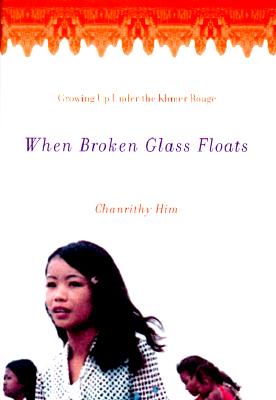

In Cambodia, there is a proverb: “When the world is imbalanced or when good and evil are thrown together into the river of life, first the klok (squash), representing good, will sink, and the armbaeg (broken glass), representing evil, will float.” But the broken glass, never floats for long. Many Cambodians, during this time period, felt they witnessed this proverb come true. Chanrithy Him in When Broken Glass Floats gives us a glimpse into the lives of many of the children and families growing up during the years when the Khmer Rouge ruled Cambodia. Him and her family tried to escape the Khmer Rouge, but instead are captured and separated from her parents. Forced from the city to labor camps, both her parents are murdered, forcing the surviving Hims to fend and watch over each other. Him dealt with starvation, exhaustion, while trying to help her family. Friendships were formed at great risk and small favors were exchanged from one labor camp youth to another. From fishing for shrimp in the dead of the night to catching rats for food, Him relied on her wits and strengths to help her family through. Despite her perseverance to help her family, Him lost five siblings to starvation and illnesses. This is a remarkable story of courage and survival.
 Ung Luong describes the atrocities the Khmer Rouge committed against humanity and the people of Cambodiain in First They Killed My Father: A Daughter of Cambodia Remembers. It’s a remarkable story and a first hand account of the Khmer Rouge regime in Cambodia. Written in present tense, the memoir brings you straight to the events as they unfold. Luong was only five, when the Khmer Rouge took power. Yet as this very tender age, Luong was exposed to beatings, starvation and her parent’s murders in the hands of the Khmer Rouge. The brutality seems endless, but yet Luong never stops fighting for escape and survival. Heartbreaking and moving, her life and the lives of her young siblings provide a powerful image of how war can deeply affect children, especially a war in which they are trained to be an integral part of the armed forces—as child soldiers. A tough read, but well worth it!

Nic Dunlop, a photographer investigates the life of Comrade Duch in The Lost Executioner: A Journey to the Heart of the Killing Fields. Why would such an educated person and a dedicated school teacher turn into a mass murderer? What would make someone commit such atrocities towards their own people? These were questions Dunlop set out to find. Duch, a major figure during the Khmer Rouge regime, managed to disappear into the jungles of Cambodia until Dunlop hunts for him. Duch presided over the deaths of thousands as the commandant of Tuol Sleng, one of Cambodia’s notorious interrogation locations, during the genocidal regime of the Khmer Rouge.
When Dunlop found him, Duch surprisingly not only confessed, but cooperated and offered history and information surrounding the war and his personal life that intertwined with the war. He provides a powerful narrative of his life leading to the war and the aftermath of the war.
I thought about the times I considered my parents “paranoid ” and “afraid.” I came to realize that the lingering effects of war and loss will continue to haunt them, but, at the same time, only through those memories will they remember how they survived the horrific regime to give my siblings and me a better life. To this day, I am amazed by the courage and strength of the Cambodian people who survived and lived to tell their story. Of course, my family was only one of the many families with similar stories. Here is a list of more stories like theirs:
Children of Cambodia’s Killing Fields: Memoirs by Survivors by Dith Pran
Lucky Child: A Daughter of Cambodia Reunites with the Sister She Left Behind by Ung Luong
Beyond the Killing Fields by Welaratna, Usha
Stay Alive, My Son by Pin Yathay
When Elephants Fight by Imam Vannary
Voices From S-21: Terror and History in Pol Pot’s Secret Prison by David Chandler
Survival in the Killing Fields by Ngor Haing
If you’re a visual person and would rather watch a DVD or VHS about the subject, here are a few titles you might want to check out:
The Killing Fields (the 1984 movie about Cambodian journalist Dith Pran who coined the term)
Visions of Cambodia (touches on the lingering effects of genocide in Cambodia)
Pol Pot : A Man of Genocide ~ Tina M.
Leave a Comment