
 If you’ve been to your local library sometime this month, you’ve probably seen a display of books that have been challenged or banned in libraries, bookstores, and communities at some point in history. Created in honor of Banned Books Week (Sept. 27 through Oct. 4), these displays may have made you wonder why these books were censored in this first place. See this previous post on banned books for a list of book censorship’s “greatest hits” around the world and throughout time. In today’s post, we explore the censorship history of a few titles in greater depth.
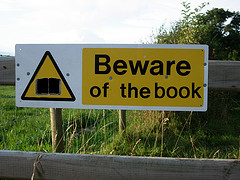
In the United States, many of us consider book censorship ancient history, a product of despotic and authoritarian governments that is unthinkable in a democratic society. Unfortunately, book banning and challenging continues in our society to this day. The vast majority occurs in school libraries and curricula, but books written for adults continue to be challenged and  sometimes removed from public libraries around the country. Below are six books that were challenged and/or removed from public libraries & bookstores in the last 50-odd years. Check out their histories (in order of date censored, not publication), then check them out from the Seattle Public Library, and celebrate your freedom to read!
- 1953 – Kingsblood Royal by Sinclair Lewis. Removed from an Illinois public library after a mother complained that her daughter had borrowed the novel and it was offensive. The FBI received many letters denouncing the book shortly after its publication, and noted in their file on Lewis that the book was of concern because it appeared to be “propaganda for the white man’s acceptance of the negro as a social equal.” Source: Dawn B. Sova, Banned Books: Literature Suppressed on Social Grounds (New York: Facts on File, 1998), 160.
- 1953 – The Communist Manifesto by Karl Marx and Frederich Engels. A frequent target of censors worldwide since its publication. Most frequently banned or challenged in the United States from 1950 to 1953. In 1953, a library board member in Brooksfield, Florida personally removed it, along with other “communist propaganda,” from the local library. He later returned most of the materials but not The Manifesto. Source: Nicholas J. Karolides, Margaret Bald, & Dawn B. Sova, 100 Banned Books: Censorship Histories of World Literature (New York: Facts on File, 1999), 108-110.
- 1957 – Howl and Other Poems by Allen Ginsberg. Confiscated at the Port of San Francisco by a US Customs Official who explained, “the words and the sense of the writing is obscene. . You wouldn’t want your children to come across it.” The publisher, Lawrence Ferlinghetti, was later arrested by San Francisco police for selling Howl at his bookstore, City Lights. The case then went to trial and the judge ruled in favor of Ferlinghetti & Ginsberg. Source: Karolides et al., 380-381.
- 1973 – A Clockwork Orange by Anthony Burgess. In Orem, Utah, a bookseller was arrested for selling this novel along with two others considered “obscene” under the town’s obscenity ordinance. Charges were later dropped, but the bookstore owner was forced to close her shop and move to another city. A Clockwork Orange has also been repeatedly challenged in high school curricula and libraries for “objectionable” language. Source: Sova, 77-78.
- 2006 – Fun Home: A Family Tragicomic by Alison Bechdel and Blankets by Craig Thompson. Both books were challenged, temporarily removed from the shelves, but ultimately retained in the Marshall Public Library (Missouri). The patron who requested the books be removed from the collection argued that collecting books like Fun Home and Blankets would lead to the library attracting the same clientele as “the porn shop down at the junction.” Source: “Graphic novels draw controversy,” American Libraries 37.10 (Nov 2006): 13(1). [to access this article, you will need your Seattle Public Library card barcode number and PIN]
Leave a Comment