
On January 21, I had the pleasure of attending a History Café event about neighborhood history. History Cafés are free, informal events that focus on various local history topics. They are held on the third Thursday of each month, from 7-8 p.m., at Roy Street Coffee and Tea in Capitol Hill. For more information and to see the upcoming topics, visit MOHAI’s calendar.
At last week’s Café, Alan Stein, staff writer for Historylink.org, presented a brief history of Capitol Hill. Afterward, a lively discussion on the history, present, and future of Capitol Hill ensued. I shared some tips on researching the history of any Seattle neighborhood, and in this two-part blog series, I’m sharing those tips with you.
Part One: Secondary research—in other words: how do you find previous research into the history of your neighborhood?

- A great place to start is The Seattle Public Library Catalog, which can show you what material is available on a specific neighborhood. From the main catalog screen, select “Subject” from the drop-down menu and enter “[neighborhood name] (Seattle, Wash.) – History” in the search box (you can leave out the punctuation marks). Here’s an example search for Ballard.
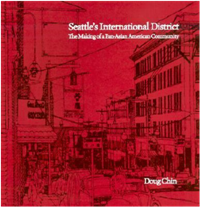

- HistoryLink.org has many excellent neighborhood thumbnail histories. From the main webpage, search for “[neighborhood name] thumbnail history.” For example, here’s a thumbnail history of the Rainier Valley.
- The Seattle Department of Neighborhoods website has context statements about many Seattle neighborhoods, in addition to inventories of city-owned buildings, neighborhood commercial properties, and residential structures constructed prior to 1906.
- 4Culture has an excellent bibliography of neighborhood history resources.
- The Seattle Civil Rights and Labor History Project’s Segregated Seattle website has information about segregation and racially restrictive covenants in Seattle neighborhoods. You may be quite surprised (and dismayed) to learn about the implicit racism in your neighborhood’s history.
Stay tuned for Part Two of this series, which will delve into primary sources and how to do your own original research into the history of your neighborhood. And join us tomorrow at Roy Street Coffee for the next History Café, in which we’ll look at the history of eating locally. Attendance is free, but please RSVP at meetup.com.
~ Bo K., Central Library
Leave a Comment