
 Local author Matt Ruff’s newest novel, The Mirage, comes out tomorrow. Ruff, whose other novels include Bad Monkeys and Set This House in Order (both winners of Washington State Book Awards), among others, will read on Saturday, February 11, at 1 p.m. at the Ballard Branch. We are excited that he’s our guest blogger for today, telling us about his nightstand reading stack and giving us a peek into what he might write next:
My new novel, The Mirage, is a 9/11 story set in an alternate reality, but I expect a lot of the discussion on my book tour will be about the real-world events that inspired it. To prepare for that, I’m rereading Lawrence Wright’s The Looming Tower, the best single-volume history I’ve found about the formation of Al Qaeda and the planning of the September 11 attacks. It’s an engaging book, full of surprising anecdotes, like how Osama bin Laden once seriously considered giving up jihad to become a farmer. If only.

Also on my to-reread pile is Between Two Worlds by Zainab Salbi, a woman whose father had the dubious honor of being Saddam Hussein’s pilot. It’s a unique glimpse of life in Saddam’s Iraq. Along the way, Ms. Salbi offers a personal portrait of her journey through Shia Islam, which, theological niceties aside, is not so different from the Christian traditions I grew up with.
Mostly for fun, I’m also revisiting Robert Harris’s Fatherland—one of my favorite alt-history novels—and Philip K. Dick’s The Man in the High Castle.
And at the same time I’m looking backward, I’m also thinking ahead. I haven’t made a final decision about what my next novel is going to be, but the leading contender is a book called Lovecraft Country, about an African-American travel writer and pulp-fiction geek living in the Jim Crow era. For research and general contemplation, I’ve got myself a copy of The Negro Motorist Green Book. Published annually from 1936 until the passage of the Civil Rights Act in 1964, the Green Book listed hotels, restaurants, and other establishments across the U.S. that accepted Black customers. Consisting primarily of addresses, it’s not a book you read in the conventional sense, but it definitely tells a story—one that is, unfortunately, not from an alternate reality.
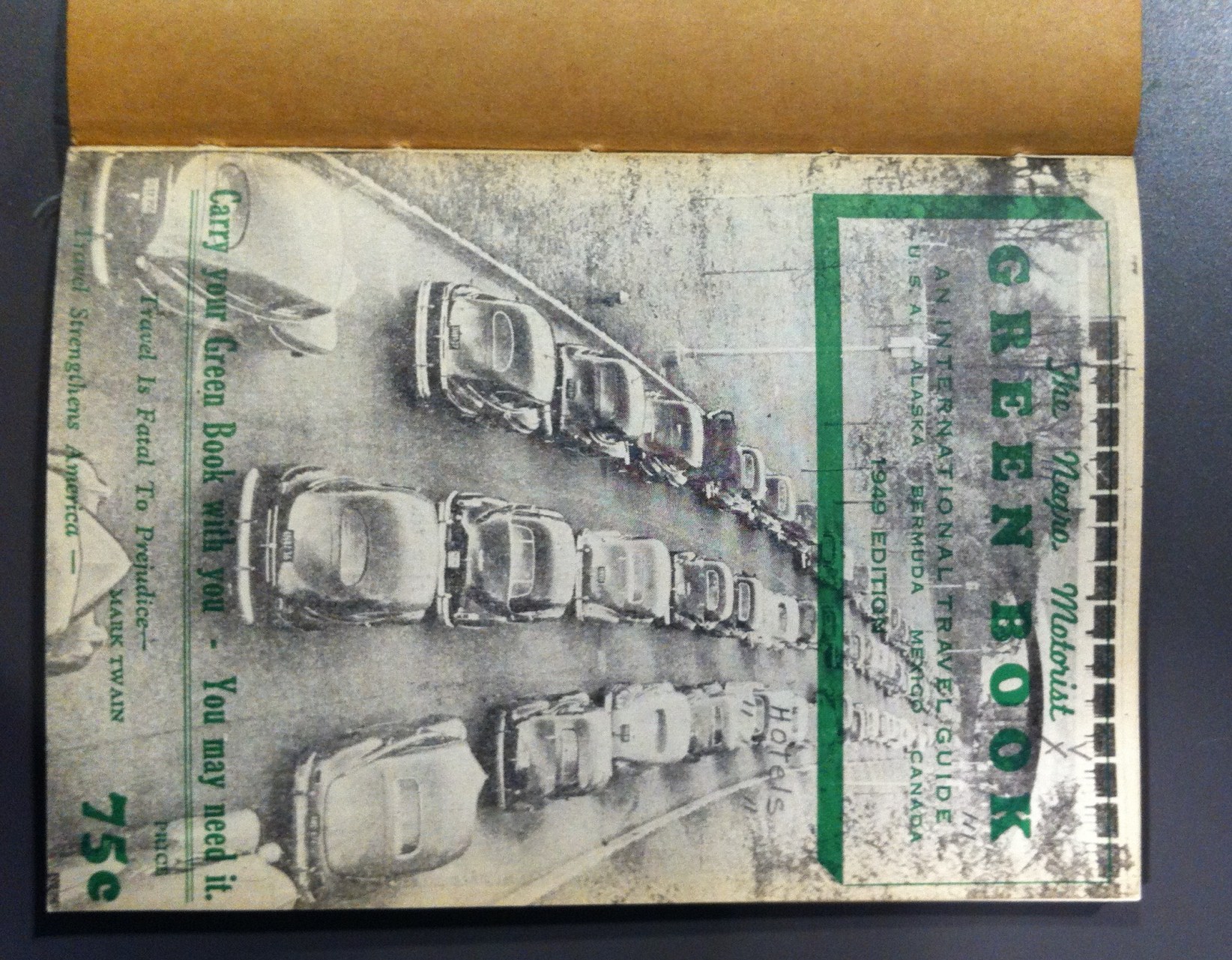 The 1949 edition of The Green Book is available online, courtesy of The Henry Ford organization and the University of Michigan at Dearborn. (A copy is also available for in-library use at the Central Library.) Interested readers should also check out James W. Loewen’s Sundown Towns: A Hidden Dimension of American Racism, which documents why The Green Book and other guides like it were necessary.
Our thanks to Matt for talking books with us! We’re looking forward to meeting him at the Ballard Branch on Saturday!
Leave a Reply to Linda J.Cancel reply