
Our travel through Mark Cousin’s history, The Story of Film, now takes us to the years 1918-1928 and the work of the great American silent  comedians. Let’s start with Charlie Chaplin, probably the most famous of all the silent film stars. Like most silent comedians, Chaplin got his start acting and directing in comedy shorts for various studios. His earliest work can be found in the Chaplin at Keystone collection, which includes the first portrayal of his iconic character, the “Little Tramp.” After Mack Sennett refused to raise his pay, Chaplin moved to Essanay Studios, a period covered in the three part collection, Chaplin’s Essanay Comedies. Perhaps Chaplin’s best short film work would be done for Mutual Studios, a period he described as the happiest of his career. You can find these shorts in the collection, Chaplin’s Mutual Comedies.
 Following his work for Mutual, Chaplin would transition from making shorts to feature length films. His short feature, The Kid, is one of the earliest to mix comedy and drama. Centered around the relationship between the Tramp and an orphaned little boy, the film was influenced by Chaplin’s own poverty-stricken childhood. The Gold Rush, one of Chaplin’s most famous films, chronicles the Tramp’s adventures as a Yukon prospector, and includes the famous sequence where, starved for food, the Tramp eats his own shoe for dinner. Later Chaplin features available for streaming include his satire of industrialization, Modern Times, and his lampoon of fascism, The Great Dictator.
 Though never as popular as Chaplin, silent film comedian Buster Keaton’s films are highly regarded for his physical comedy and often dangerous stunt work. A good mix of shorts can be found in the Buster Keaton Short Film Collection, including the film One Week, where Keaton attempts to assemble a pre-fabricated house with disastrous results. One of Keaton’s best films, Sherlock Jr, an early example of meta-narrative, tells the story of a film projectionist who literally steps into a movie to become that movie’s detective hero. Keaton’s film The General, which Orson Welles referred to as cinema’s highest achievement in comedy, involves elaborate stunts onboard a train engine and climaxes with a moving train collapsing a burning bridge.
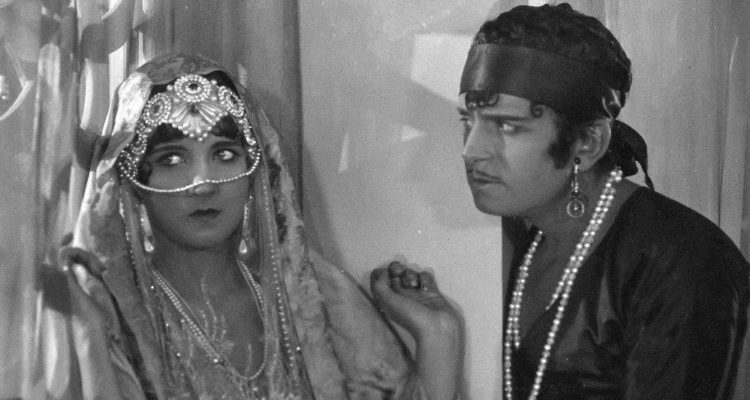
 We end this column with an early example of what Cousin’s refers to in The Story of Film as the “Hollywood bauble.” Directed by Raoul Walsh and starring Douglas Fairbanks, The Thief of Bagdad is a gorgeous example of early genre filmmaking and, with its beautiful Hollywood stars and extravagant fantasy world, a predecessor to such films as The Lord of the Rings and the Harry Potter series. For a different take on genre filmmaking, try Aelita: The Queen of Mars, the first big budget movie from the Soviet Union. Created to compete with the Hollywood films that were already dominating world cinema, this early science fiction film features amazing sets and costumes reflecting the Russian avant-garde style of “constructivism.”
~ Posted by Deanna H.
Leave a Comment