
Continuing our journey through Mark Cousin’s The Story of Film, we’ve now reached the first full decade of talking pictures. Though silent films would still be made into the mid 1930’s (with some made in both silent and sound versions for a time), by the end of the decade “talkies” would be the industry standard and Hollywood would be entering its “Golden Age.” It was in this decade that Hollywood would inaugurate four genres that continue to this day.
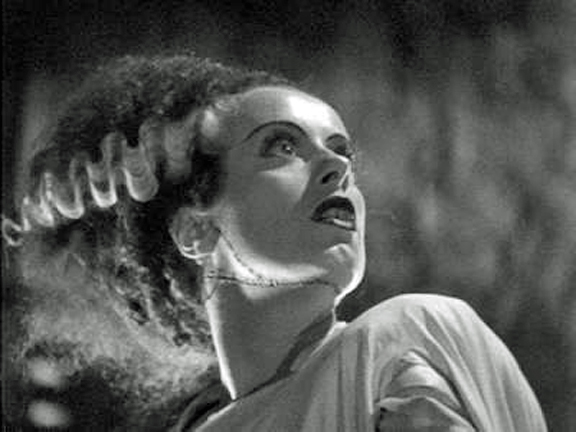
 We begin with the horror genre. While Tod Browning’s film adaptation of Dracula had been the first successful sound horror movie, it was James Whale’s version of Frankenstein that would be more influential. While Browning’s film was brightly lit with theatrical staging, Whale’s film featured sets and lighting patterned after German expressionist films like The Cabinet of Dr. Caligari. Whale’s later films, The Bride of Frankenstein (the start of the first horror film franchise) and The Old Dark House would also reflect his sense of humor, bringing a dark, comic feel to the proceedings.
 From horror, we move to the crime genre, specifically the gangster film. Featuring “ripped from the headlines” screenplays filled with violent, tough-talking criminals, they gave Hollywood its first flowering of the anti-hero, until the institution of the Hays Code and their mandated message that “crime never pays.” Actors like James Cagney (The Public Enemy; The Roaring Twenties), Humphrey Bogart (The Petrified Forest), and Paul Muni (Scarface) would become stars playing bad guys who were always more interesting than the “forces of good” opposing them.
Two other genres would flower in the Hollywood garden of the 1930’s:  animation and the Western. Both had been around since the early days of cinema, but it was in the 30’s that they would really shine. Pioneers like Lotte Reiniger (The Adventures of Prince Achmed; The Stolen Heart) and Ub Iwerks (Balloonland) created sterling examples of early animation before the work of Walt Disney would dominate the genre with his feature Snow White and the Seven Dwarves. And the Western, which had its first success with the silent film The Great Train Robbery, would finish the decade with its first classic, John Ford’s Stagecoach starring John Wayne.
But while Hollywood buffed the shine on “the bauble,” European filmmakers were already looking for ways to break it and go beyond.  Filmmaker Jean Cocteau was creating visual poetry with the film The Blood of a Poet, filling it with surrealist touches he would later use in his classic film La Belle et la Bette (Beauty and the Beast). While Hollywood idolized the rich and the pursuit of wealth, French filmmaker Jean Renoir would attack the hypocrisy of the wealthy in his satire La Règle du Jeu (The Rules of the Game). In England, a director named Alfred Hitchcock was directing the first of many suspense classics with Sabotage and The Thirty-Nine Steps. Yet over all this filmmaking hung a shadow, as the world began its march to war.
~ Posted by Deanna H.
Leave a Comment