
As we’ve seen in The Story of Film, while American cinema had been at the forefront of filmmaking for many years, over time, Hollywood’s movies had begun growing stagnant. The Production Code Administration still restricted what could be said, done, or shown in American movies. But by the early 1960’s, the PCA was losing its hold on the industry. The success of foreign films, which weren’t subject to PCA oversight, plus the studio’s new willingness to challenge the Code, led to the adoption of a movie ratings system in 1968. And the unprecedented success of independent film Easy Rider, actor Dennis Hopper’s directorial debut, encouraged studios to take a chance on new directors, many of whom would make their mark on cinema history.
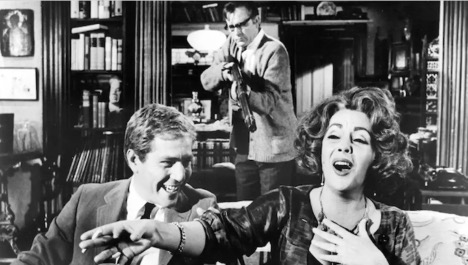
 One of those new directors had locked horns with the PCA and emerged unscathed, successfully negotiating with the MPAA for his film’s release virtually intact. That film, Who’s Afraid of Virginia Woolf?, was the first directed by Mike Nichols, and Nichols’ next picture, The Graduate, would be an even bigger box office success. Nichols would follow up that film’s dissection of youthful, suburban ennui with the star-studded war satire Catch 22 and the science fiction thriller, Day of the Dolphin, among others.
While Nichols began his career in theater, several major directors would rise from Hollywood’s biggest competitor: television. Sam Peckinpah began his career working on TV westerns, before moving to feature films. His incendiary The Wild Bunch and the elegiac Pat Garrett & Billy the Kid rejected Hollywood’s sanitized vision of the “Old West” and marked a  turning point in the genre.
Robert Altman also began his career working for television. Altman’s first success, the satire M*A*S*H*, introduced his use of semi-improvised, over-lapping dialogue, giving his movies a naturalistic feel. Altman would bring his unique approach to a variety of films, including LA Noir The Long Goodbye, psychological thriller Images, and revisionist Western McCabe & Mrs. Miller.
 Other new directors were rising from the realm of low budget moviemaking, often beginning their careers working for B-movie maverick Roger Corman. Francis Ford Coppola would direct horror film Dementia 13 for Corman, before moving to the major studios. Coppola became a leading figure in the “New Hollywood” movement, directing the mafia epic The Godfather and the chilling, conspiracy thriller The Conversation.
Director Martin Scorsese had also worked for Corman, before making his breakthrough film Mean Streets. Finding inspiration in his childhood in New York, Scorsese’s films explored themes  of guilt and redemption, along with ruminations on violence and crime, which would run through later works like Taxi Driver and Raging Bull.
Ironically, the director of the film which began the “New Hollywood” movement, would become its first casualty. Though Easy Rider had been a hit, Hopper’s second film, the metafictional The Last Movie, would be a critical and commercial flop, resulting in his exile from Hollywood. For the studios, box office returns would remain the final arbiter of success.
~ Posted by Deanna H.
Leave a Comment