
We’ve now come to the end of our journey through Mark Cousins’ The Story of Film, following cinema’s early beginnings to the advent of the digital age. But before we ring down the curtain, we have a few more stops on our tour of cinema history.

As digital effects began to strip the “realness” from mainstream filmmaking, the use of digital cameras gave a new freedom to documentary filmmakers. Perhaps the most successful of these is director Michael Moore, whose documentaries took a different approach by placing Moore himself at their center. Moore’s films Bowling For Columbine and Fahrenheit 9/11 especially feature his distinctly liberal point of view. In contrast are the films of French documentarian Nicolas Philibert, who strove to remain as unobtrusive as possible, chronicling events without commentary. Philibert’s documentaries bring unseen worlds to life, with Louvre City showing the behind the scenes life of a museum, while La Maison De La Radio chronicles 24 hours in the life of Radio France.

Acclaimed Turkish director Nuri Bilge Ceylan began his career in the late 90’s, telling stories of individuals whose past actions isolate them from others. His award-winning film Once Upon A Time In Anatolia, chronicles a search by police for a dead body whose killer can’t remember it’s resting place. Romanian director Cristi Puiu also used his films to detail the estrangement of modern life, with his dark comedy The Death of Mr. Lazarescu chronicling the travails of a dying man and the paramedic who drives him from hospital to hospital attempting to find him medical treatment.

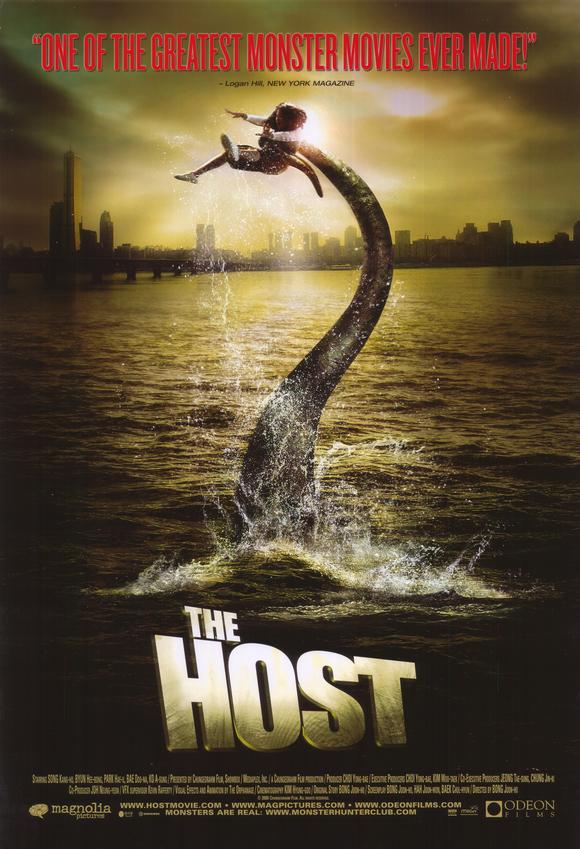
Two Korean directors who shared Puiu’s taste for black comedy emerged during the 2000s: Bong Joon-ho and Park Chan-wook. Bong’s films focus most often on the plight of lower-class people struggling against an uncaring bureaucracy and an uncomprehending upper class. His film The Host follows a family trying to desperately rescue a daughter snatched by a monster their government refuses to admit exists. Park’s films are often concerned with the effects of trauma and violence, with his Vengeance trilogy (Sympathy For Mr. Vengeance; Oldboy; Lady Vengeance) dealing directly with revenge and the devastating cost it exacts on both parties.

For our last stop, let’s consider the work of Russian filmmaker Alexander (Aleksandr) Sokurov, whose films often mix together documentary and fiction. Sokurov’s masterful film Russian Ark, seemingly begins as a documentary on the Russian Hermitage Museum, then slips back and forth through time with each new room existing in a different era. Using a modern high definition camera, the film is shot in a single, unbroken 96-minute take featuring over 2000 actors. A blend of old school, epic filmmaking using modern technology, the film is perhaps the perfect place to end this appreciation of Cousin’s series. I hope this column has acted as an intriguing glimpse into that series and that it encourages you to check out a cinematic history that I have only scratched the surface of here.
~ Posted by Deanna H.
Leave a Comment